
Rebar Scanning in Florida
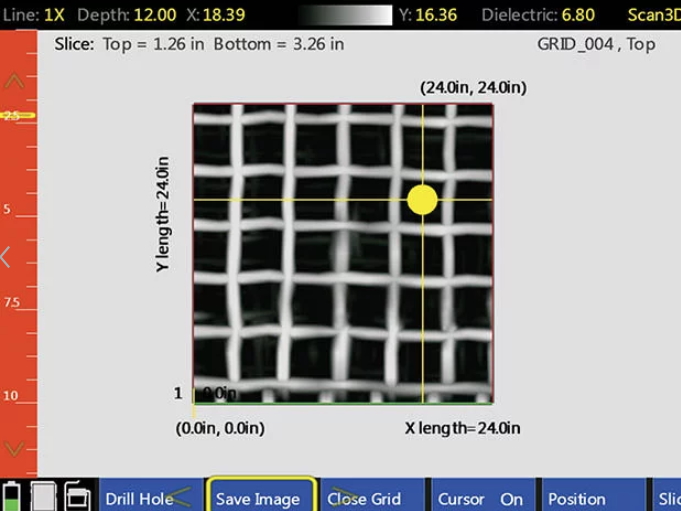
Before you drill an anchor, install a dowel, or lay out a saw cut, you need to know where the reinforcement is. Hitting rebar with an anchor drill bit can ruin the bit, crack the surrounding concrete, and void the anchor's load rating. Cutting a primary bar during a saw cut can compromise structural integrity. A rebar scan maps the steel inside the slab so your crew knows where to place anchors, where to cut, and where to route penetrations before any work begins.
When Rebar Scanning Is Used
- Adhesive and mechanical anchor installation — knowing bar location lets you place anchors in clear windows between bars, maximizing embedment and avoiding bar contact
- Dowel drilling into existing slabs or walls — avoids cutting through structural steel when extending or connecting concrete elements
- Handrail and equipment base plate installation — anchor patterns can be adjusted to fall between bars
- Saw cutting layout — understanding bar direction and depth prevents unintended cuts through primary reinforcement
- Core drilling — rebar mapping is typically done alongside PT cable scanning before any core program
- Structural repairs — locating existing reinforcement before chipping, patching, or connecting new steel
What the Scan Shows
- Bar run direction — most reinforced slabs have two perpendicular mat directions
- Approximate bar spacing within each mat
- Approximate depth of the top mat and, where detectable, the bottom mat
- Congested zones where bars are closely stacked or bundled
- Clear windows between bars where anchor placement is feasible
What Rebar Scanning Cannot Confirm
- Exact bar diameter — GPR identifies the presence and path of reinforcement, not the specific bar size
- Bar continuity — whether a bar runs the full span or terminates mid-slab
- Bar condition or corrosion state
- Whether a conflict is structural or secondary — that assessment requires the engineer of record
What You Receive
- Paint or chalk marks on the slab or wall showing bar run directions
- Marked clear windows between bars for your anchor or drill pattern
- Identification of congested zones to avoid
- Verbal briefing with the installer or foreman before work starts
- On request: photo documentation for QA records or engineer review
Schedule Rebar Scanning for Your Next Drilling Project
Tell us the anchor schedule, drill diameter, and slab type. We will confirm scheduling and arrive ready to mark clear points for your crew.
Request a Rebar Scanning QuoteFrequently Asked Questions
Related services: GPR Concrete Scanning | Post-Tension Cable Scanning | Core Drilling Scan | Structural Scanning | Top Mistakes Before Core Drilling