
GPR Concrete Scanning in Florida
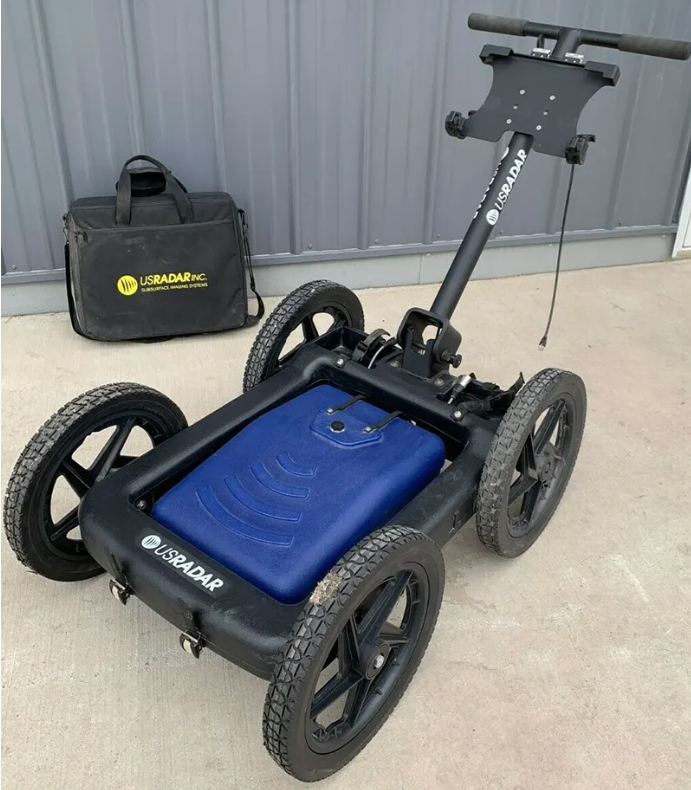
Before you cut, core, or anchor into concrete, you need to know what's inside the slab. Ground Penetrating Radar (GPR) sends a radar pulse through concrete and reads the signal that bounces back off anything with a different density — rebar, post-tension tendons, conduit, water lines, and voids all reflect differently. The scanner maps those reflections in real time so we can mark clear zones and conflict zones on the slab surface before your crew starts work.
When to Use GPR Concrete Scanning
GPR concrete scanning is used before any work that penetrates, cuts through, or is anchored into concrete where the internal contents are unknown or uncertain:
- Core drilling — before drilling for MEP sleeves, drain lines, risers, or any through-slab penetration
- Saw cutting — before cutting trenches, control joints, or openings through slabs
- Adhesive and mechanical anchoring — before installing anchor rods, handrail bases, or equipment pads
- Wall penetrations — before cutting openings through reinforced concrete walls
- Selective demolition — before breaking or chipping concrete where the reinforcement layout is unknown
- Post-tensioned slabs — before any penetration work on PT decks, parking structures, or high-rise floors
This service is especially important on older buildings with outdated or missing drawings, post-renovation slabs where utilities may have been rerouted, and occupied facilities where any utility strike causes immediate operational impact.
What GPR Can Detect in Concrete
- Rebar — direction, approximate spacing, and depth of top and bottom mats
- Post-tension tendons — path direction and approximate location (not tension status)
- Electrical conduit and plumbing lines embedded in or below the slab
- Voids and delamination within the slab
- Slab thickness estimation
What GPR Cannot Always Detect
No scanning technology is infallible. GPR has limitations that are important for contractors and engineers to understand:
- Non-metallic conduit (PVC, HDPE) may not reflect clearly depending on soil or concrete conditions
- Signal penetration decreases with depth — very deep utilities may not be detectable
- Heavily congested reinforcement can mask objects behind the top mat
- GPR identifies PT tendon location and path but cannot assess tendon tension or condition
- Fiberglass rebar may require different detection methods
We communicate these limitations clearly on every job so your team can make informed decisions.
How the Field Process Works
- Review the work scope and any available drawings before arriving on site
- Set up a scan grid aligned to the planned penetration or cut locations
- Collect data with the GSSI StructureScan Mini — a high-resolution GPR system designed for concrete imaging
- Interpret scan data in real time and identify reinforcement, conduit, and PT risk zones
- Mark the slab or wall with paint indicating clear zones, conflict zones, and no-cut boundaries
- Walk the foreman or drill operator through the markings before work begins
What You Receive
- Field markings (paint and/or chalk) on the slab or wall surface
- A verbal walkthrough with the foreman or crew lead before work starts
- On request: photo documentation of scan coverage and marked zones
- On request: written reference notes for superintendent or engineering coordination
Who Uses GPR Concrete Scanning
General contractors, concrete contractors, electricians, plumbers, HVAC contractors, core drilling companies, structural engineers, and facility managers use this service. If your work goes into or through concrete, GPR scanning belongs in your pre-task process.
Schedule a Concrete Scanning Quote
Tell us the slab type, the number of penetration points, and your target mobilization date. We'll get back to you fast.
Request a Scanning QuoteFrequently Asked Questions
Related services: Post-Tension Cable Scanning | Rebar Scanning | Core Drilling Scan | Utility Locating | What Is GPR Scanning?